
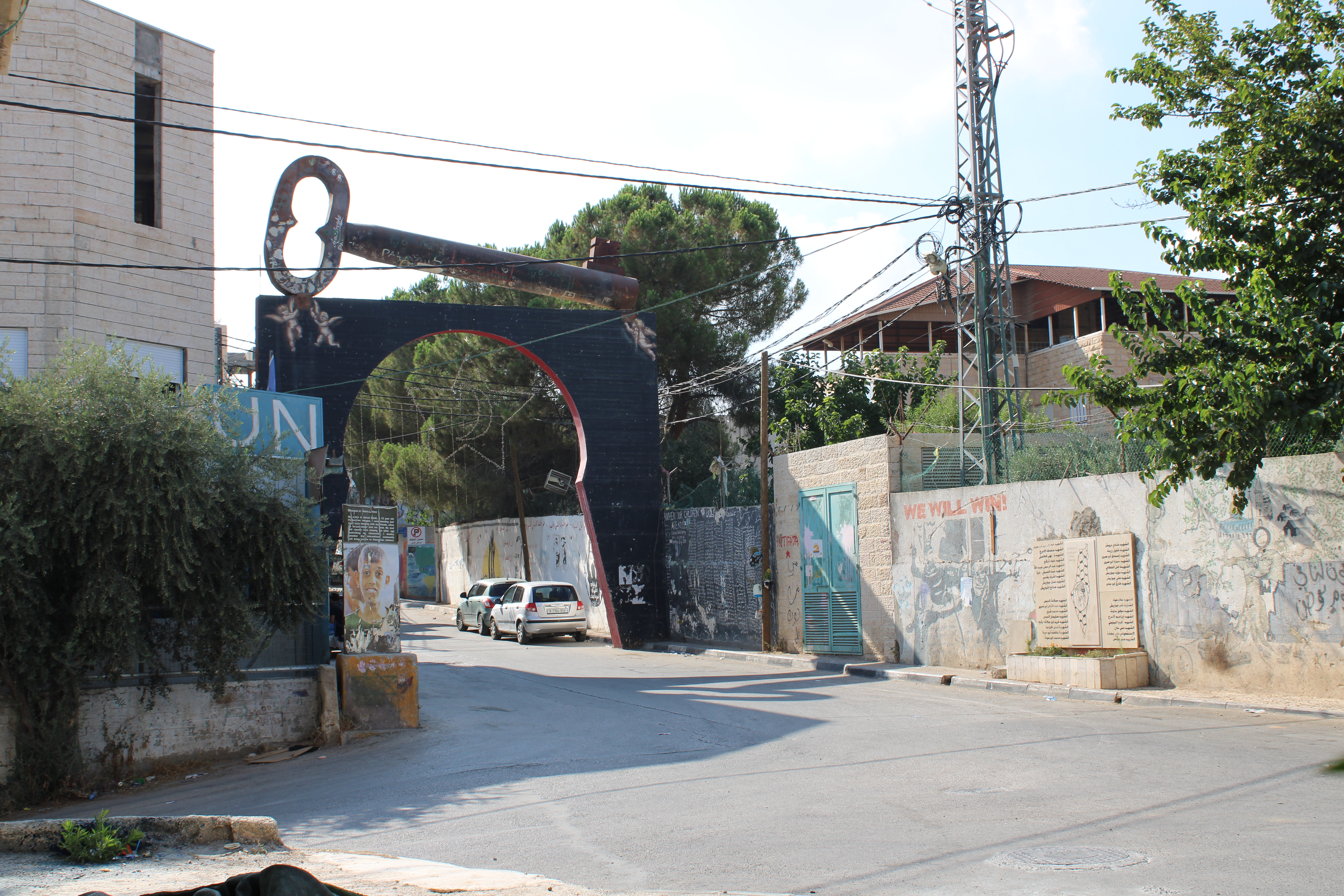
Located on a hill between the towns of Beit Jala and Bethlehem in the West Bank, the Aida Camp is marked by a prominent key at its entrance, symbolizing the right of return for Palestinian refugees. The camp is surrounded by the expanding Gilo settlement and the Separation Wall, a poignant reminder of the harsh realities of Israeli occupation and colonization.
Origins of the Camp
Aida Camp was established in 1950 by the United Nations Relief and Works Agency for Palestine Refugees in the Near East (UNRWA). UNRWA leased the 66-dunum site from the Hashemite Kingdom of Jordan, which administered the West Bank at the time. The site’s proximity to the city of Bethlehem, which had the infrastructure to support the camp, and the availability of land largely determined the choice of the site.
The camp was named after Aida, the woman who owned the land and where Aida Coffee Shop was located. The camp's residents decided to keep this name because of its Arabic meaning, “return,” in reference to the return of Palestinian refugees to their land.
The residents of the camp originally came from more than 40 villages and towns that were decimated during the 1948 Nakba as well as in 1967. The main villages of origin of the Palestinian refugees in the Aida camp are listed on a mural in the camp: Bayt Awwa, Dayr Ayyub, Ramla, Khulda, Abu Gosh, Jerusalem, Jarash, Rafat, Zakariyya, Bir al-Saba‘ (Beersheva), Surif, Al-Noor, Bayt Jibrin, Ajjur, al-Walaja, al-Qabu, Allar, Dayr Aban, al-Maliha, Bayt Nattif, Ras Abu Ammar, Al-Qubayba, Bayt Mahsir, Iraq al-Manshiyya.
At its inception, the camp housed 1,125 refugees living in 94 fabric tents provided by UNRWA. The International Committee of the Red Cross and the Quaker Association were among the first organizations to provide humanitarian assistance to the forcibly displaced population. In the early 1950s, UNRWA became the main institution responsible for providing basic services in the camp.
Infrastructure
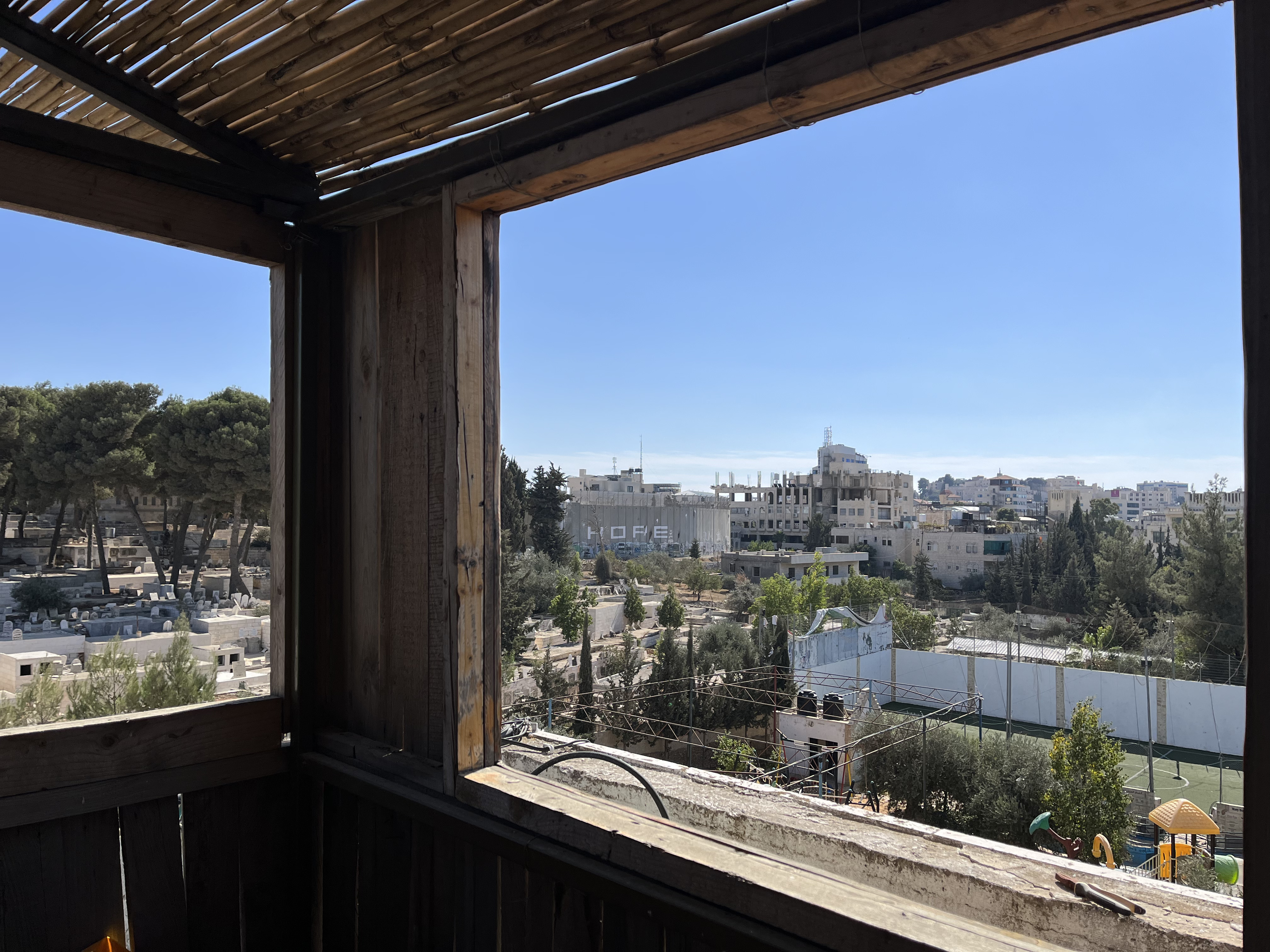
In 1956, UNRWA replaced the original tents with cinder block housing units. Each unit consisted of one or two rooms, measuring 9 by 12 meters, and was usually occupied by an entire family; the average family size ranged from five to eight. Over time, as the number of families grew, the camp began expanding vertically. During the 1970s and 1980s, residents began adding floors to the original units, resulting in a dense cluster of multistory buildings. After the Oslo Accords were signed, some infrastructure improvements were made, including paved alleys and upgraded sewage systems. Reinforced concrete construction emerged in the 2000s; further expansion is extremely difficult because of space limitations and ongoing Israeli occupation restrictions. This results in overcrowded buildings housing multiple generations within a maze of narrow alleyways. Some buildings are so close together that residents can cross between them by jumping from roof to roof.
According to UNRWA, 7,244 refugees were registered in the camp in 2023. However, this does not represent the actual number of Palestinian refugees living within the 0.071 square kilometers camp. According to the Palestinian Central Bureau of Statistics (PCBS), in 2017, 2,824 people lived in Aida Camp.
UNRWA has highlighted the dire conditions in Aida Camp, including poor sewage and water systems, severe overcrowding, and damaged infrastructure. The camp’s accommodations are inadequate, unhygienic, unsafe, and overcrowded, severely affecting the physical and psychological well-being of residents.
Aida Camp is situated on an 85-meter-high hill, which presents unique challenges for water distribution. At the foot of the hill lie two adjacent community water tanks with a combined capacity of 100 cubic meters. The Bethlehem Water Supply and Sewerage Authority deliver water, which is then pumped from these tanks throughout the camp. However, due to prioritization of homes at lower elevations, residents at higher elevations experience delays in receiving water. This has led to complaints over unequal access to water among the camp residents.
In response to the lack of green spaces and deteriorating living conditions, the Lajee Centre launched the Green Aida environmental initiative in 2014. The project included the cultivation of rooftop gardens atop the camp’s tightly packed buildings.
Socioeconomic Conditions
Labor
Unemployment is an important issue in Aida Camp, as it is in the 19 refugee camps in the West Bank. The vast majority of men in the camp work in the Israeli labor market, especially in construction. However, since the Second Intifada (2000-2005), work permit restrictions and the construction of the Separation Wall in 2003 have resulted in limited access to the Israeli market. Unemployment in the camp has thus been exacerbated. According to the 2017 PCBS Census, the unemployment rate was 25 percent. Since October 7, 2023, the Israeli government has decided to suspend all work permits for the Palestinians from the West Bank, which has led to a worsening of conditions.
Health
Until 2020, there were no health facilities in Aida Camp. Residents had to travel about one kilometer to Dar Khamasta, a facility rented by UNRWA in Beit Jala. Since then, a health center has been built inside the camp to provide services to its residents and those in the surrounding areas. During times of crisis in the camp stemming from Israeli occupation measures, the International Committee of the Red Cross provides medical aid and emergency relief.
A persistent health concern in Aida Camp is the frequent use of tear gas by Israeli security forces, which affects residents of all ages. Tear gas poses serious risks to physical and mental health and has long-term consequences for well-being.
Education
Aida Basic Boys’ School is the only school located within Aida Camp. Established by UNRWA in 1951, it was renovated in 1996 and fully reconstructed in 2020. During the 2023–2024 academic year, the school enrolled 449 students. Girls from the camp attend a separate school located outside the camp boundaries. Both schools also serve students from nearby areas, including Al-Azza, Beit Jala, and Doha.
Due to overcrowding and limited staff, UNRWA operates the schools on a double-shift basis to manage the high student population. Despite these measures, the schools lack essential facilities and have cramped playgrounds and sports arenas.
The boys’ school is located in a highly sensitive area, close to the Separation Wall and an Israeli military watchtower. To safeguard against potential harm, all classroom windows have been permanently sealed. This measure is intended to reduce the risk of students and teachers becoming targets, which has occurred multiple times. To address the resulting psychological distress and alleviate trauma, psychologists regularly visit the school.
In the West Bank (excluding East Jerusalem), UNRWA provides education only from grades 1 through 9. For secondary education (grades 10–12), students from Aida Camp must attend Palestinian Authority–run or private schools in nearby Bethlehem.
To help meet the needs of early childhood education, several local organizations—such as Aida Kindergarten, the Martyr Amal Center, and the Future Hope Center—operate kindergartens within the camp.
Administration and Control
A complex network of local and international organizations administers the Aida refugee camp and provide essential services and support for its population. Since the camp’s establishment in the early 1950s, UNRWA has been responsible for managing education, healthcare, social services, and infrastructure within the camp. The Jordanian government administered Aida Camp until 1967. After the June 1967 War, Israel took control of the area, and the camp began experiencing frequent incursions and attacks by Israeli security forces.
During the First Intifada (1987–1993), the camp was placed under strict Israeli military control. It became a site of resistance against the Israeli occupation. Frequent clashes resulted in significant losses among the camp's residents. The construction of Israeli settlements around the area increased during this period, exacerbating tensions and harsh living conditions in Aida Camp.
After the Oslo Accords were signed, Aida Camp fell within Area A, which is under the control of the Palestinian Authority. The street adjacent to the Israeli Separation Wall, which houses the Boys’ School and the UNRWA office, falls within Area C, under Israeli control. However, the Israeli Occupation Forces largely retain control of security in all areas and routinely enter the camp.
In 1996, the PLO Department of Refugee Affairs established the Popular Services Committee in Aida Camp, as it did in all the camps in the West Bank. Elected by camp residents, these committees address daily issues and coordinate with UNRWA and other organizations to ensure that the community's needs are met. Politically, they advocate for the right of return of Palestinian refugees to their land. The Palestinian Authority provides supplementary support in public health, education, and security.
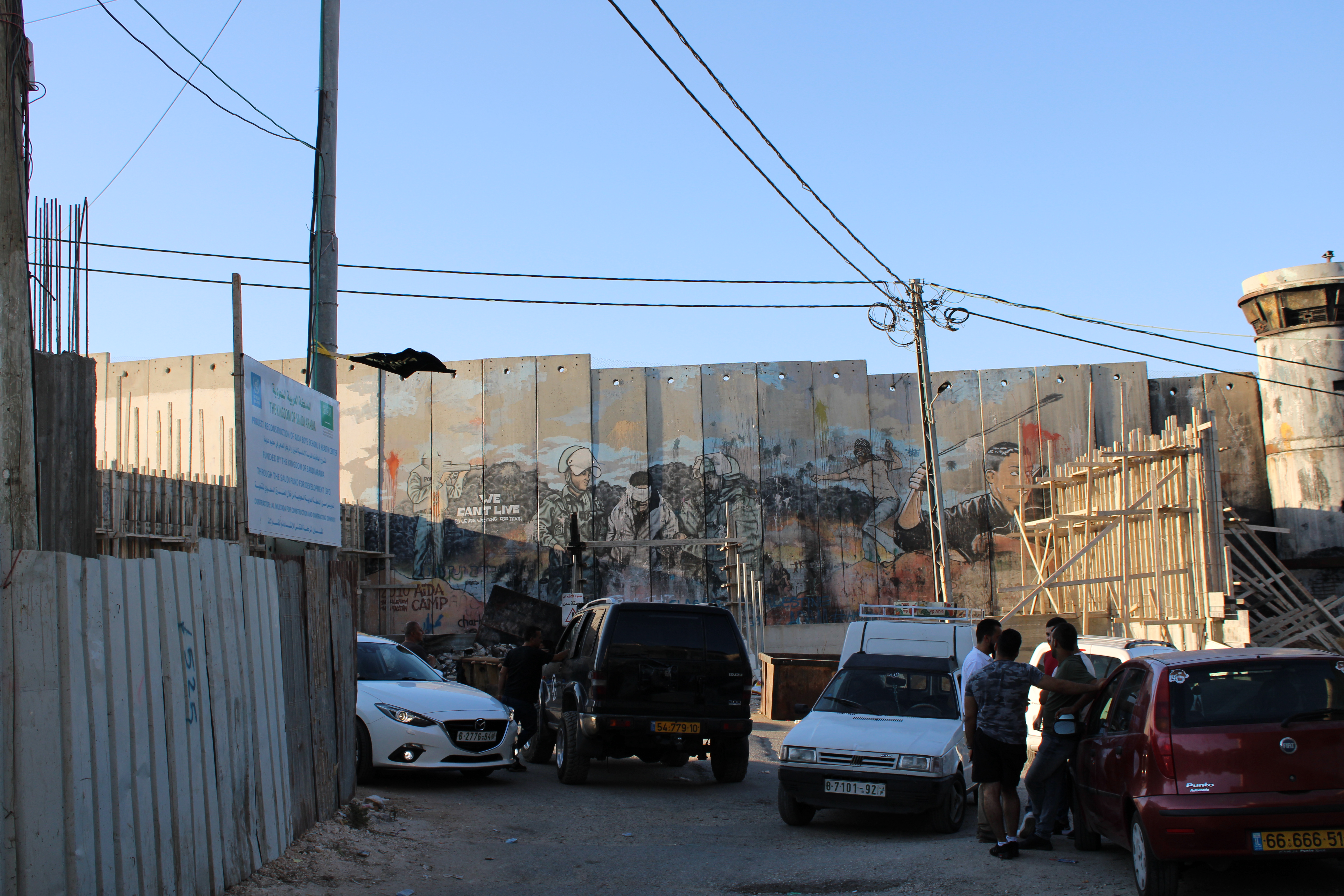
During the Second Intifada (2000-2005), the situation in the Aida refugee camp deteriorated drastically. There was an increase in Israeli military incursions, frequent arrests, and violent confrontations that left deep scars on the community. The camp has also been affected by the construction of the Separation Wall in 2003, which borders the camp on two sides, only 20 meters away from the northern part of the camp. This geographical oppression is evident in the camp. Across from the camp’s entrance is a 100-meter-long road that leads to a light-blue steel gate. This gate is directly linked to an Israeli military zone and facilitates continuous soldier patrols day and night. Security has remained a central issue within the camp, with frequent military raids, arrests, and restrictions on movement.
The escalation of violence on October 7, 2023, further exacerbated the camp’s already fragile situation. Israeli military incursions into the camp increased, resulting in a heightened atmosphere of fear and instability among its residents. According to Human Rights Watch, these events disrupted essential services, such as water and electricity.
Political Activity and Civil Society Institutions
The rise of the Palestinian Liberation Organization (PLO) in the 1960s significantly impacted the camp’s political environment as residents became increasingly involved in resistance movements. During the late 1970s and early 1980s, PLO membership increased in West Bank camps, particularly through the activities of Youth Centers. Initially established by UNRWA for men's sports activities, these centers transformed into cultural-political spaces, as occurred in Aida Camp in the early 1980s.
Like many other Palestinian refugee camps, the Aida refugee camp is a hub of political activity and resistance. Various political factions, including Fatah and Hamas, have a presence in the camp, and their influence is evident in its activities and leadership structures. Political murals, flags, and symbols are common sights in Aida, serving as expressions of political allegiance and reminders of the ongoing struggle for Palestinian rights.
Furthermore, civil society and a number of NGOs and community groups play an essential role in fostering solidarity among residents. These organizations, often formed around local needs, provide educational, recreational, and psychological support; they include Aida Youth Social Center, Al-Rowad Society for Culture and Arts, Lajee Center (1999), Ghassan Kanafani Center, and Aida Women Center.
Many of these activities have been disrupted since October 2023. Community leaders and activists work tirelessly to support their fellow residents, often at great personal risk.
Aida Camp Popular Committee. “Aida Camp.”
https://www.aidacommittee.org/ar/?page_id=80
Alazzeh, Ala. “Popular Services Committees in West Bank Refugee Camps: Political Legacies, Formations, and Tensions.” Jerusalem Quarterly 94 (2023): 33-47.
Alazzeh, S., S. E. Galaitsi, Amahl Bishara, Nidal Al-Azraq, and John L. Durant. “Impacts of Intermittent Water Supply on Water Quality in Two Palestinian Refugee Camps.” Water 11, no. 4 (2019): 670.
Applied Research Institute – Jerusalem. “‘Ayda Camp Profile.” 2010. http://vprofile.arij.org/bethlehem/pdfs/VP/%27Ayda_cp_en.pdf
Applied Research Institute - Jerusalem. “Bethlehem City Profile: Land Use and Security Arrangements.” 2010.
http://vprofile.arij.org/bethlehem/pdfs/VP/Bethlehem_cp_en.pdf
Haar, Rohini and Jess Ghannam. No Safe Space: Health Consequences of Tear Gas Exposure Among Palestine Refugees. Human Rights Center and School of Law University of California, Berkeley. January 2018.
https://humanrights.berkeley.edu/wp-content/uploads/2018/10/nosafespace_full_report22dec2017.pdf
Human Rights Watch. “Questions et réponses : L’assaut du 7 octobre commis par des groupes armés.” 17 July 2024.
https://www.hrw.org/fr/news/2024/07/17/questions-et-reponses-lassaut-du-...
Imam, Zehra. “In Aida Refugee Camp, Palestinian Resilience Overcomes Israeli Oppression.” Mondoweiss. 17 December 2023.
https://mondoweiss.net/2023/12/in-aida-refugee-camp-palestinian-resilien...
Palestinian Central Bureau of Statistics. Preliminary Results of the Population, Housing and Establishments, Census, 2017. February 2018. https://www.pcbs.gov.ps/Downloads/book2364-1.pdf
United Nations Office for the Coordination of Humanitarian Affairs. “Interactive Map of the Occupied Palestinian Territory.” 20 December 2016.
https://www.ochaopt.org/content/interactive-map-occupied-palestinian-territory
United Nations Office for the Coordination of Humanitarian Affairs. “West Bank Access Restrictions Map.” 28 November 2024.
https://www.ochaopt.org/content/west-bank-access-restrictions-map-novemb...
UNRWA. “Aida Camp.” 2023.
https://www.unrwa.org/where-we-work/west-bank/aida-camp
موسوعة المخيمات الفلسطينية. "مخيم عايدة / عائدة / عيدة".
https://mokhayyam.com/ar/article/205/مخيم-عايدة-عائدة-عيدة