
Zarqa Camp was the first refugee camp for Palestinian refugees to be established in Jordan after the Nakba in 1948. It was built on the outskirts of the city of al-Zarqa in northeast Jordan, near the Hijaz railway line. It is locally referred to as the Camp of al-Awda, or Return Camp, and administratively it is part of the Qasabat al-Zarqa district in al-Zarqa province. The camp is considered to be an integral part of the city’s modern history and has played a significant role in shaping its social fabric.
The Origins of the Camp
In 1949, the International Committee of the Red Cross established the Zarqa refugee camp approximately 25 kilometers northeast of Amman on 180 dunums made available by the Jordanian government. In 1950, the newly established United Nations Relief and Works Agency for Palestine Refugees in the Near East (UNRWA) assumed charge of running the camp in collaboration with the Jordanian authorities.
Upon its founding, Zarqa Camp received at least 8,000 Palestinian refugees, most of whom came from depopulated cities and villages such as Ramla, Lydda, Bisan, Safad, Jaffa, and Jerusalem. At first, they were housed in tents, but by the late 1950s the tents were gradually replaced by small housing units adjacent to one another, each measuring 80 square meters. According to UNRWA records, these units were allocated to families consisting of five to seven people.
The convening of the Jericho Conference in December 1948, followed by the decision in April 1950 of the Jordanian National Assembly to unify the two banks of the Jordan River into the Hashemite Kingdom of Jordan, marked a turning point in the status of Palestinian refugees in Jordan. This decision led to granting them Jordanian citizenship and equality with Jordanians in rights and obligations while preserving their refugee status and their right of return to their homes in Palestine. Within the same context, the Jordanian government contributed to organizing refugee affairs through the establishment of the Ministry of Refugee Affairs in 1949, then the Ministry of Reconstruction and Development in 1950.
Evolution of the Camp’s Infrastructure
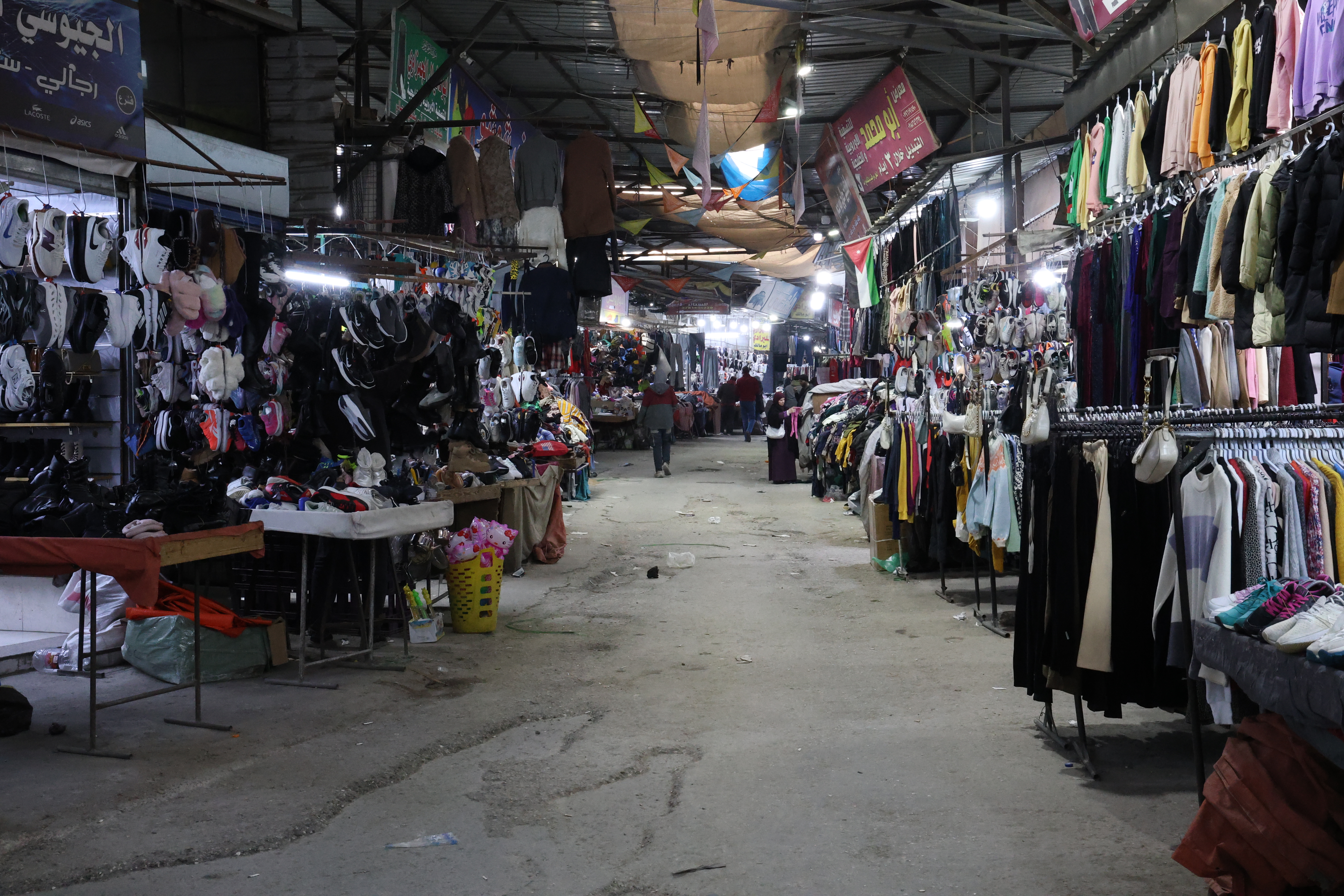
Zarqa Camp was built on desert land. The camp is bordered by King Talal Road to the north and the Army Road (the Zarqa-Amman highway) to the east, thus preventing the camp’s horizontal expansion. Itinerant street hawkers and vendors with informal stalls and fruit and vegetable shops are spread out along the railway line near the camp. The eastern side of the camp, parallel to Army Road, serves as the main entrance to the camp and to a flea market for second-hand clothes. It is also the only entrance to the street directly leading to the UNRWA offices, the agency’s schools and health clinics, and the governmental offices that administer the camp. To the south lies the bus complex, called New Terminus, a major hub that links al-Zarqa to the country’s main road transportation network, especially those routes going to Amman. To the west is the cemetery, now within the camp’s boundaries, which has been closed since the late 1970s because it has reached capacity.
Zarqa Camp is relatively small in area and has a smaller population than other Palestinian camps in Jordan such as Baqa‘a and Wihdat. The camp is made up of fourteen streets locally known as sufouf (rows) that are arranged in a grid running lengthwise through the camp. Most of these streets are numbered (saff no. 1, saff no. 2, and so on), while main ones have unique local names (e.g., Broad Street, Schools Street, al-Darawish Mosque Street, al-Quds Street). The sufouf contain residential units separated by narrow alleyways no more than one meter wide, which facilitate residents’ movement between the rows.
Over time, the Jordanian government took gradual steps to allow vertical construction in the camp. In 1988, it became possible to add one story to existing structures, followed by two stories in 1997, and finally three stories in 2012 (all subject to obtaining the necessary permits). This has helped alleviate part of residents’ hardship caused by overcrowding and narrow living spaces, and reduced the risks of haphazard and dangerous vertical expansion of dilapidated buildings. Although the usufruct that grants the right to benefit from housing units in the camp does not constitute a deed of ownership, these units are nevertheless bought, sold, and rented out among residents. As is the case in the rest of Jordan, the residents also pay for water and electricity that are billed through meters.
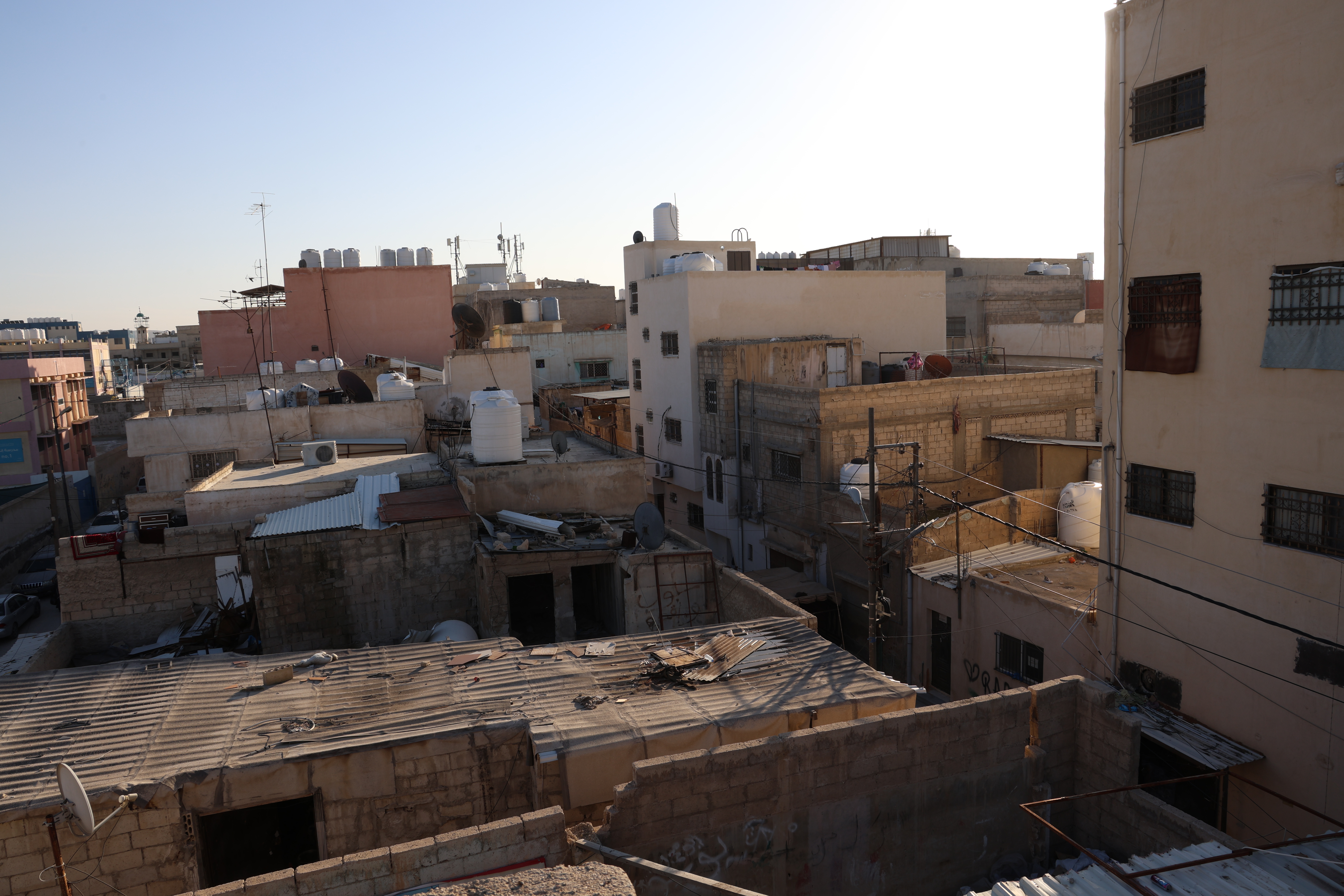
Due to the urgent need to repair and renovate the dilapidated infrastructure in the camp, Zarqa—along with all the other Palestinian refugee camps in Jordan—was included within the Jordanian government’s Social Safety Net Package project. Since 2000, the Camp Services Committee, a local committee affiliated with the Department of Palestinian Affairs (DPA), has been responsible for implementing the Zarqa Camp Infrastructure Project, in coordination with donors and UNRWA. As of 2024, this project has led to the construction of about 145 new housing units. The committee also works on rehabilitating the homes of the camp’s poorest families, while covering the rental costs of alternative temporary accommodation until the renovations are completed. It also distributes plastic tarpaulins to houses that have rainwater leakage during the winter and provides financial assistance to families whose homes have been damaged by fires.
As part of the camp’s infrastructure improvement, the committee paved the camp’s streets using asphalt mixes; in 2024 it had paved 95 percent of streets. The maintenance work also included concrete repairs to several of the camp’s entrances and sidewalks, as well as the installation of a new water supply network with plastic pipes. Regarding basic services, internet and electricity networks now cover the entire camp, and 100 modern streetlights have been installed, maintained, or replaced. By end of 2025, a public park was inaugurated in Zarqa Camp as a Royal initiative.
The camp played a major role in the development of the neighborhoods of Jannaʿa and al-Dubbat, located on the lands directly facing the cemetery. This was because these two neighborhoods were settled by more forcibly displaced Palestinian families, in addition to Jordanian families that migrated from the countryside and desert areas out of need and in search of better living conditions. According to several residents, before urban expansion reached this area, it was possible to see the Zarqa River flowing from the western edge of the camp; back then, the river served as an accessible respite for families to enjoy nature, especially during the summer.
Socioeconomic Conditions
After the June 1967 War (the naksa, or setback), a new wave of people displaced from the West Bank settled in the camp, greatly increasing the population density. According to UNRWA statistics for 2023, the camp’s population stands at approximately 21,109 Palestinian refugees, representing about 6 percent of the total population of the city of al-Zarqa.
Zarqa Camp comprises approximately 3.4 percent of the total area covered by the thirteen Palestinian refugee camps in Jordan, and it represents 16.7 percent of the total area of the Palestinian camps located within Zarqa governorate, alongside the Marka (Hittin) and al-Sukhna Camps.
Zarqa Camp’s identity is reflected in the modest nature of its architecture and in its political and social symbols. UNRWA flags fly at the camp’s entrances, and some of its commercial establishments are named after the original villages and towns in Palestine from which the residents were forcibly displaced, such as Abu Iyad al-Bureiji Grocery, Jaffa Bakery, and Palestine Right of Return stationery shop. In comparison to other camps, Zarqa Camp is characterized by having a relatively homogeneous population, as it is nearly devoid of residents from other nationalities—such as Iraqi families (after the US invasion of 2003) and Syrian families (after 2011), or low-income migrant workers from countries like Egypt, Bangladesh, and the Philippines.
For the Camp Services Committee, the difficult living and environmental conditions in Zarqa Camp do not encourage its residents to stay. A field study on social responsibility and self-interest among youth in Jordan’s Palestinian camps shows that staying in the camp is rarely motivated by a sense of identity or the symbolic meaning of the place, but rather because of limited economic options and the high cost of living outside the camp.
Education
UNRWA provides essential services to Palestinian refugees in Zarqa Camp, such as education, health care and social support. It runs one preschool in the camp, Budding Flowers Kindergarten, which serves children under age six, and four schools inside the camp that operate on a single-shift system. In 2023, these schools served around 1,985 pupils from first to the tenth grade (compulsory education). The schools employ 78 teachers.
Secondary school education is provided by the Jordanian government and is available only outside the camp. Camp students are also permitted to pursue higher education in public universities and compete with their Jordanian peers for places at universities on the basis of their scores in the tawjihi, the national secondary school examination. High-achieving students from the camp are eligible for royal scholarships, which are given annually to 350 students from the country’s Palestinian refugee camps.
UNRWA statistics for 2023 show a significant downturn in the academic qualifications attained by students in the camp. This can be attributed to deteriorating economic conditions and weak motivation among residents, stemming from feelings of limited prospects within the camp.
The indicators of this decline are evident in the low rates of enrollment in the camp’s schools. Only 28 percent of children under the age of six attend the camp’s preschool, while the illiteracy rate in the camp is about 17 percent, one of the highest among other camps in the country. About 22 percent of the camp’s residents aged 22 and older have not completed primary school, and only 4 percent are enrolled in a university.
This decline in the level of education in the camp has led to a general worsening in standards of living. Employment opportunities are limited, and as a result residents have been vulnerable to exploitation, which has mental and physical health consequences.
Healthcare
UNRWA provides primary healthcare to the residents of Zarqa Camp through its health center, which serves 120,502 Palestinian refugees from the camp and beyond. In 2023, the center had an average of approximately 74 medical consultations per day. The health services available at the center include a dental clinic, a medical laboratory, and a pharmacy. In addition, UNRWA runs a community rehabilitation center and a center for people with special needs.
These essential services remain inadequate, because of the limited number of specialist doctors and the scarcity of medications. About 68 percent of the camp’s residents do not have any kind of health insurance, which prevents them from accessing healthcare outside the camp, which is expensive.
About 15 percent of the camp’s population suffers from chronic ailments; this is the second-highest rate among Palestinian refugee camps in Jordan.
Labor
The acquisition of Jordanian citizenship by most Palestinian refugees in Jordan has contributed to their economic integration. Residents of Zarqa Camp are employed in a wide range of jobs in both the public and private sectors, as well as in self-employed activities and skilled crafts, both inside and outside Jordan.
As of 2025, the camp has approximately 370 commercial establishments serving the daily needs of residents. The development of local markets began with fruit and vegetable vendors who operated small shops or simple carts along al-Awda Club Street, eventually leading to the emergence of Souq al-Hisba, a popular market known for its low prices and its competition with Zarqa’s city center. The second-hand clothing market moved to the camp's eastern entrance, which later on came to be called al-Bala, or Flea Market Street. Broad Street was first known as al-Warsha (Workshop Street), because it was a hub for repair shops, garages, and workshops for skilled trades that provided employment opportunities for young people. However, these repair shops and garages came to be regarded as a nuisance in the camp, and ultimately most of them relocated or closed down and were replaced by grocery stores and other shops.
Despite this economic activity, which is well-integrated into the surrounding labor market, the unemployment rate remains as high as 21 percent inside the camp, while about 19 percent of its population lives below the national poverty line of 168 Jordanian dinars per person per month.
Administration of the Camp
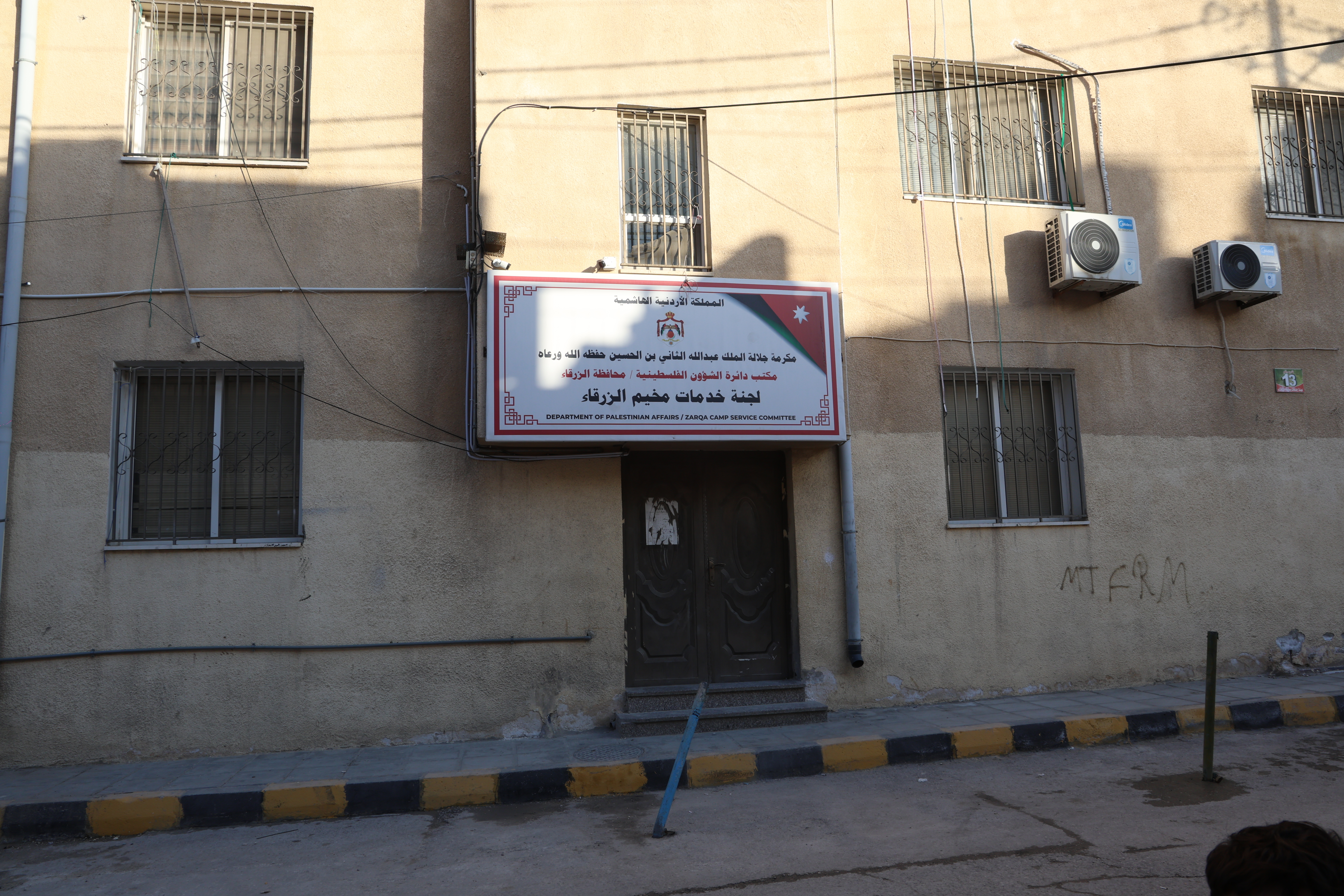
In 1980, responsibility for administering the Palestinian refugee camps in Jordan was transferred to the Ministry of Affairs for the Occupied Territories. After the 1988 decision by Jordan to sever ties with the West Bank, the DPA was established under the purview of the Ministry of Foreign Affairs. Since then, this body has been in charge of overseeing the affairs of Palestinian refugees throughout the Kingdom overall, but especially in the refugee camps, through the Camp Services Committees.
The DPA carries out tasks in the camp similar to those carried out by city municipalities: coordinating with relevant authorities to provide essential services like electricity, water, and the sewer network; paving roads; refurbishing dilapidated housing units; and replacing damaged manhole covers. It also oversees the issuance of business licenses and permits for new business. A police station, located near the camp’s northern entrance, is in charge of maintaining public safety and public order.
Civil and Political Organizations in the Camp
As early as the 1960s, Zarqa Camp has been the site of active political engagement by its residents in support of the Palestinian cause, particularly after the founding of the Palestine Liberation Organization in 1964. However, the camp's political significance gradually declined after the events of Black September (1970–1971), which effectively ended the Palestinian armed presence in Jordan. With the signing of the Wadi Araba Peace Treaty between Jordan and Israel in 1994, the camp’s political role diminished even further. In this context, UNRWA adopted a policy of maintaining "neutrality" following Jordan’s official recognition of Israel.
UNRWA’s neutrality policy affected the agency’s work, particularly in its schools. Prior to the policy change, UNRWA schools served as arenas for fostering the Palestinian narrative among younger generations and for enabling both pupils and teachers to participate in activities supportive of Palestine. Today, however, UNRWA staff members are prohibited from involving themselves in political or ideological issues.
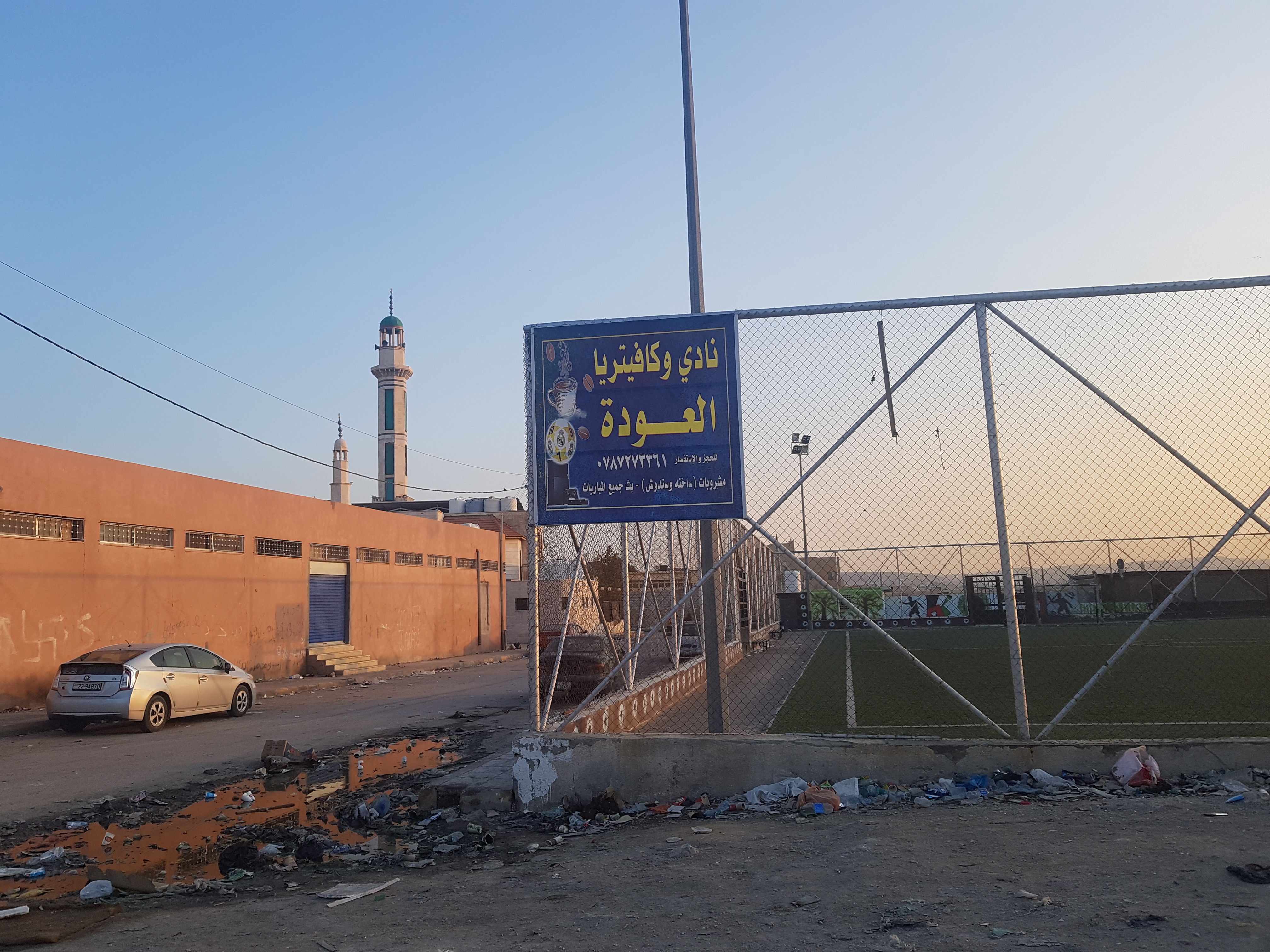
Despite this political decline, the camp is the site of notable civil society activity. UNRWA oversees the Community Development Committee, established in 1998, which is in charge of three main centers: the Women's Programs Center, the Community Rehabilitation Center, and the Budding Flowers Kindergarten. In addition, Zarqa Camp was the first refugee camp to create a special committee to take care of orphans through the Islamic Center Association. It also established the first sports club in a refugee camp, named the al-Awda Sporting Club, which plays social, cultural, and athletic roles and represents the camp in eleven local sports federations.
The camp also includes several civil society NGOs and charitable associations, such as the Eyes of Hope Jordanian Association for Supporting Cancer Patients and the Jordanian Association for Return and Refugees. Regional humanitarian organizations like the United Arab Emirates Charity Association and the International Islamic Relief Organization are also present in the camp.
Since the beginning of the twenty-first century, foreign funding has increasingly begun to focus on programs having to do with women's empowerment and child protection. Such initiatives have been significantly prioritized at the expense of programs related to the Palestinian identity and cause. This decline intensified after 2011, as most humanitarian organizations redirected their efforts toward supporting Syrian refugees, while retaining only limited portions of their budgets for programs meant to serve the host community, which includes the Palestinian camps’ residents.
In conclusion, Zarqa camp–like all other Palestinian refugee camps–remains a space in which conflicting emotions overlap. On the one hand, it bears witness to the ongoing Nakba experienced by Palestinians and to their suffering, which has endured for over 75 years. On the other hand, despite accumulated challenges, the camp continues to stand as a symbol of collective memory and a living pillar of the Palestinians right of return.
al Husseini, Jalal. “The Evolution of the Palestinian Refugee Camps in Jordan. Between Logics of Exclusion and Integration.” In Myriam Ababsa and Rami Farouk Daher, eds., Villes, pratiques urbaines et construction nationale en Jordanie, 181–204. Beyrouth: Presses de l’Ifpo, 2011.
https://doi.org/10.4000/books.ifpo.1742
Alnsour, Jamal, and Julia Meaton. “Housing Conditions in Palestinian Refugee Camps, Jordan.” Cities 36 (2014): 65–73.
https://doi.org/10.1016/j.cities.2013.10.002
Guignon, Sophie, and Chloé Domat. “Jordan: Meeting the Palestinians of Zarqa, Three Generations after the ‘Nakba.’” France 24, 22 March 2024.
Khaleefa, Amal, Emad Hajjaj, et Khalid Nahar. De mémoire de réfugié - Min Ḏākirat lāǧīʾ, Comics, Amman, Al-Ahlia, 2025.
Tiltnes, Åge A. and Huafeng Zhang. Progress, Challenges, Diversity: Insights into the Socio-economic Conditions of Palestinian Refugees in Jordan. Norway: Fafo, 2013.
UNRWA. “Zarqa Camp.” 2024.
https://www.unrwa.org/where-we-work/jordan/zarqa-camp.
شومر توفيق وأيمن عبد المجيد (إشراف). أمجد عليان، مهند الطراونة، محمد درس، أمل الخواجا، يافا الشايب. "الشباب في المخيمات الفلسطينية بين المسؤولية الاجتماعية والخلاص الفردي: مخيم الزرقاء نموذجاً". غير منشور.
دائرة الشؤون الفلسطينية. "مخيمات اللاجئين الفلسطينيين في الأردن".
https://www.dpa.gov.jo/Ar/List/مخيمات_الالجئين_الفلسطينيين_في_الأردن
دائرة الشؤون الفلسطينية. "مخيم الزرقاء".
https://www.dpa.gov.jo/AR/ListDetails/مخيمات_الالجئين_الفلسطينيين_في_الأردن/4/6
المركز الفلسطيني للإعلام. "الأردن يسمح بالتوسع العامودي في مخيمات اللاجئين الفلسطينيين".
https://palinfo.com/news/2012/07/24/148575/
موسوعة المخيمات الفلسطينية - مخيم الزرقاء
https://mokhayyam.com/ar/article/105/مخيم-الزرقاء